
Resources
Our sustainability assessment, sector insights and previous outputs shared with the world of maritime actors.
Evaluate your sustainability ambitions
How ambitious is your organisation on maritime sustainability? Take our 5-minute self assessment to gain insight into your future-readiness.
-
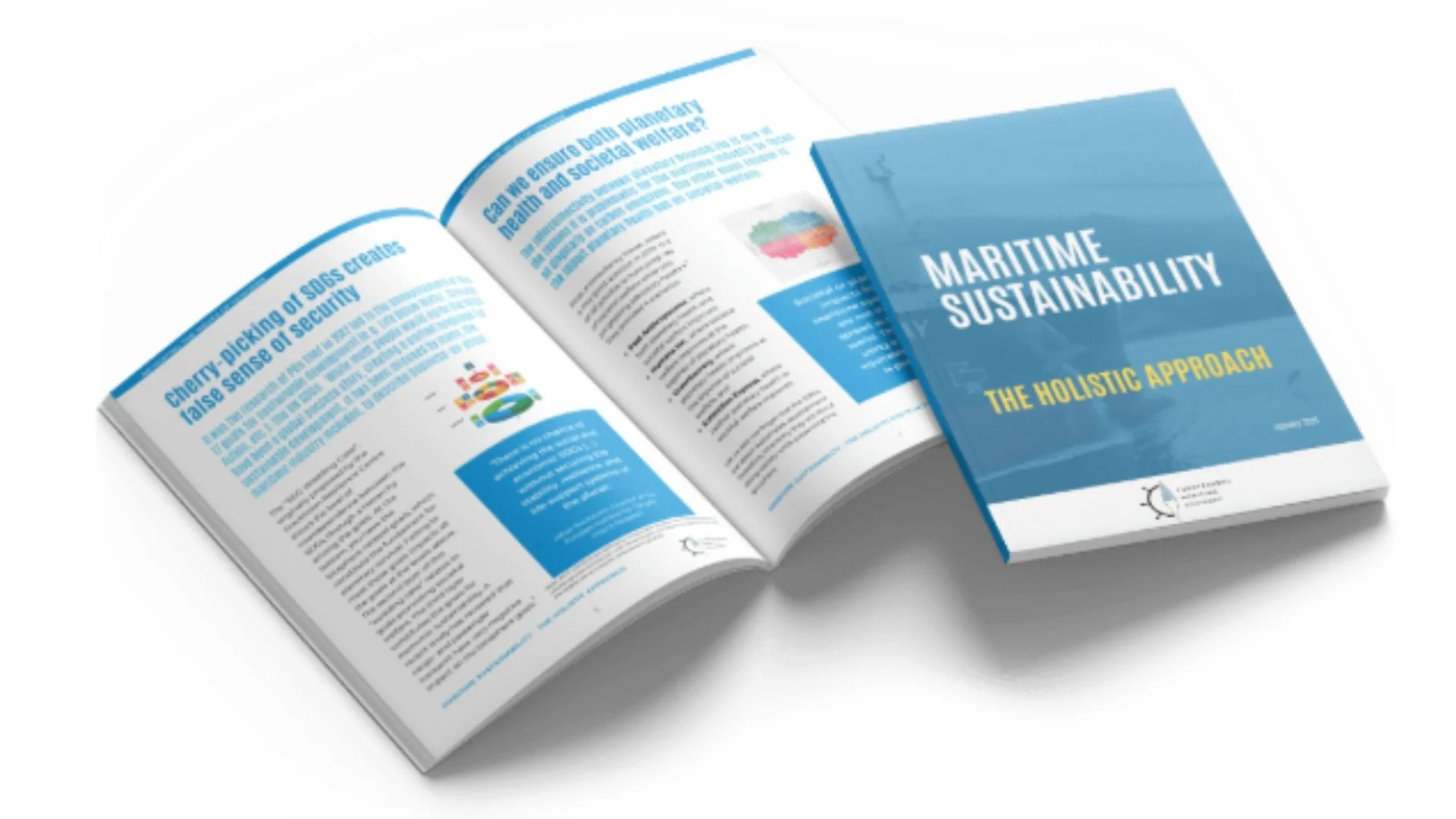
White Paper: Holistic approach to Sustainability
Our white paper introduces our holistiic approach to working with sustainability and highlights the urgent need to improve sustainability in the maritime industry.
-
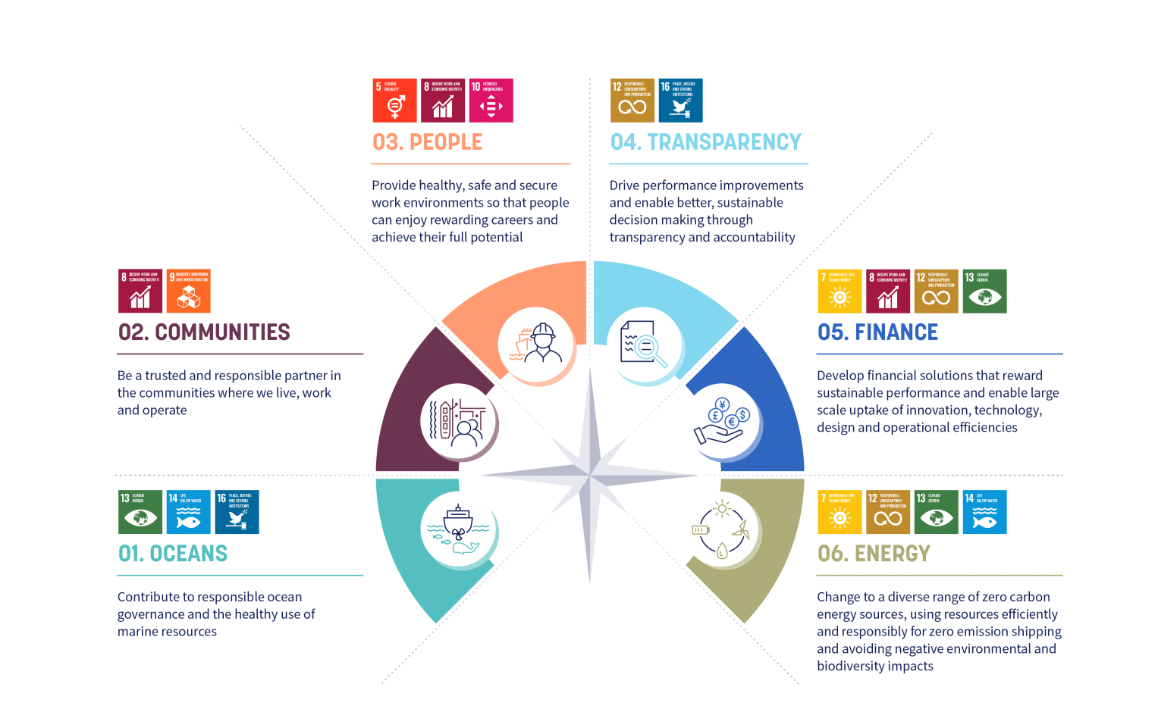
Sustainable Shipping Initiative Roadmap
We use SSI’s roadmap towards marine biodiversity and ocean health for 2030 in our sustainability work.
-

Workshop Materials: Navigating Maritime Risk and Opportunity within Planetary Boundaries
Our workshop materials from Nordic Baltic Maritime Forum (2026) includes an overview of strengths and weaknesses in nordic states maritime sector and scenarios for future sector development.
-

Research partnerships
We partner with research forums and analytical tool developers for our strategy and reporting work. As partners, we also offer a discount for our clients to use these tools.
-

Student materials: Visionary films and reflective excercises
Our short films are used as educational materials in the classroom for the next generation of seafarers and maritime proffesionals.
Our approach to Sustainability
There is an urgent need to improve sustainability in the maritime industry.
Our holistic approach considers economic development, social development, and environmental protection as interdependent, yet mutually reinforcing components.
Learn more about how we approach key aspects of maritime sustainability below.
-
Maritime transport is on an energy transition towards decarbonization. With the IMO targeting net-zero emissions by 2050, the industry faces increasing pressure to decarbonise while navigating technological uncertainty, evolving regulation, and shifting market expectations.
Shipping’s transition will not happen in isolation. In coming years, we expect to see wider systemic changes across the energy sector, port infrastructure, and ship finance. We help maritime stakeholders identify their opportunities within this transition and gain strategic foresight into the future of the industry.
-
Sustainability is increasingly influencing the future of maritime finance and how funding channels view organisational resilience. As frameworks such as the Poseidon Principles evolve and expectations from lenders and investors continue to grow, access to capital is becoming more closely linked to transparency and ESG-reporting performance. This development is reshaping how financial risk, opportunity and value are assessed throughout the industry.
We help organisations navigate emerging requirements connected to sustainable maritime finance, strengthen transparency around sustainability performance, and identify how evolving financial expectations may impact long-term competitiveness.
-
As the maritime industry navigates increasing complexity, digitalisation and rapid transformation, the role of seafarers and maritime professionals becomes ever more critical to the sector’s long-term sustainability. Investing in a strong organisational culture becomes essential to building a resilient maritime organisation, whose personnel is fit to navigate an uncertain future.
We help organisations identify gaps and opportunities enabling to support seafarer welfare, which in turn attracts and retains the very best seafarers. We also work with capacity building of existing teams and crews, that support the implementation of sustainability strategies on the ground.
-
A healthy ocean is fundamental to the future of maritime transport and the global systems that depend on it. As ocean ecosystems come under increasing pressure, maritime stakeholders face growing environmental, operational, and societal risks ranging from extreme weather events to resource conflicts and shifting geopolitical dynamics.
We work with organisations across the maritime value chain to identify where their activities intersect with ocean health, both directly and indirectly. By exploring connections through a broad sustainability lens, we help uncover new pathways to build long-term resilience and make a positive ocean impact.
Link: Our vision for the future of ocean health -
A healthy ocean is fundamental to the future of maritime transport and the global systems that depend on it. As ocean ecosystems come under increasing pressure, maritime stakeholders face growing environmental, operational, and societal risks ranging from extreme weather events to resource conflicts.
We work with organisations across the maritime value chain to identify where their activities intersect with ocean health - both directly and indirectly. By exploring connections through a broad sustainability lens, we help uncover new ways to build long-term resilience and make a positive ocean impact.
-
As the maritime industry navigates major global challenges, ports and coastal communities are becoming increasingly important partners. Navigating new economic contexts, supporting seafarer welfare and decarbonizing energy infrastructures will not happen solely within maritime organizations, but will also require cross-sector coordination and local implementation. This creates a new urgency for collaborating across the maritime value chain.
We help organisations solve complex sustainability through collaboration, whether it be with local workforces, policymakers or port authorities.
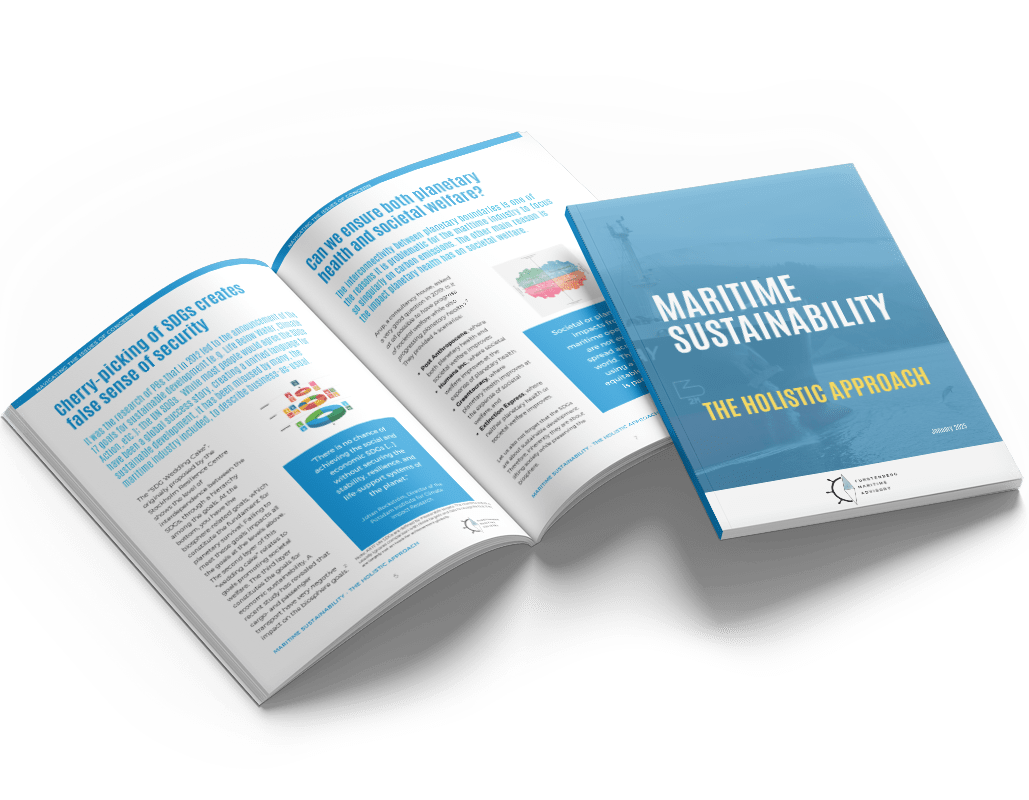
White Paper: Holistic approach to maritime sustainability
Our white paper explores how a holistic approach to sustainability can help the maritime industry navigate complex challenges while building future resilience